
For decades, digital infrastructure has grown following a very clear logic: more demand, more capacity, more users, more data centers — and everything happened in the same place: Earth.
But that model is beginning to show its limits.
Energy consumption, land availability, regulatory pressure, and the need to scale without friction are leading to a question that until recently sounded like science fiction.
What if the next step is not about building more data centers… but moving them off the planet?
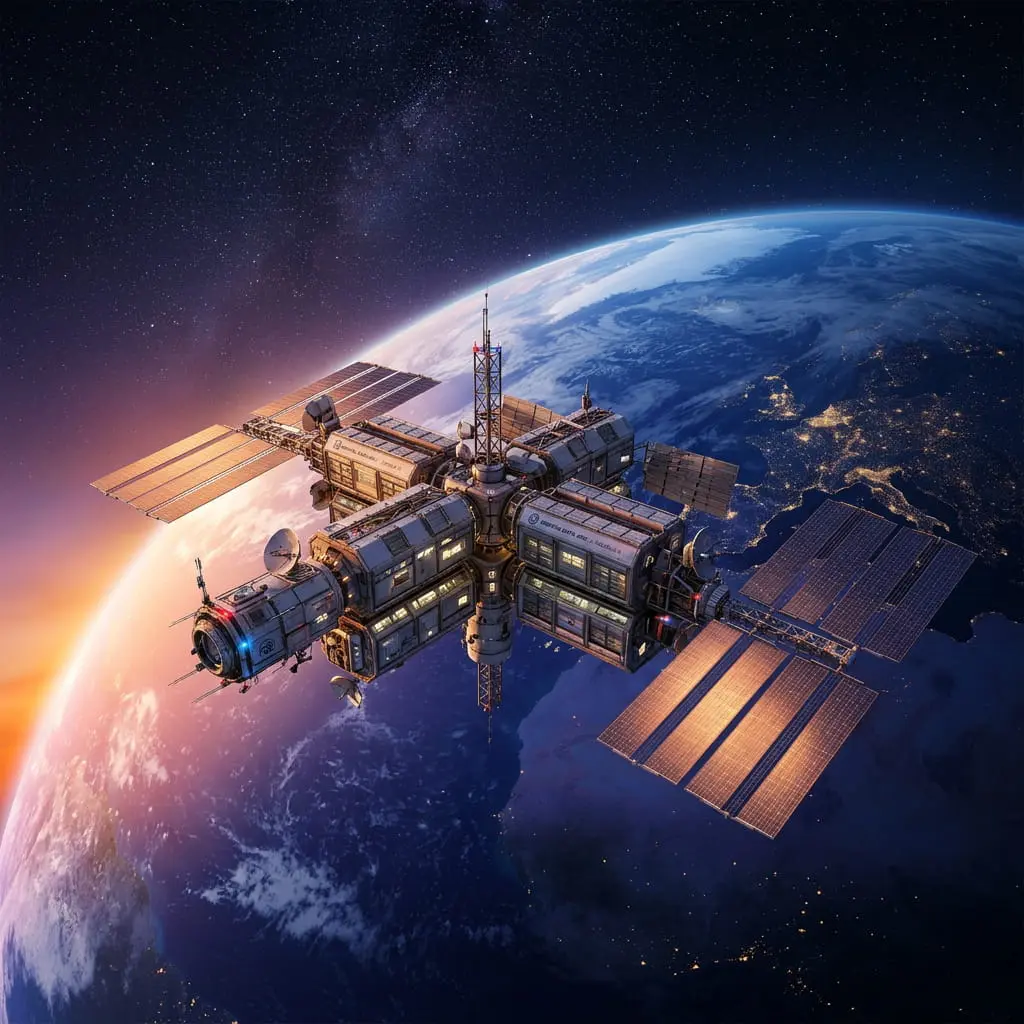
This is no longer a theoretical idea. It has already begun.
On the International Space Station, computing systems designed to operate outside Earth have already been deployed. Hewlett Packard Enterprise sent real servers into space as part of an experiment to validate how critical systems perform under extreme conditions. It was not a conceptual exercise, it was infrastructure operating beyond the planet.
The goal was to determine whether a system could process data, maintain stability, and operate autonomously in an environment where there is no margin for error. Because in space, failures are not repaired — they are prevented.
At the same time, another layer of infrastructure has evolved in parallel.
Satellites are no longer just communication systems, they are now processing platforms. They analyze images, filter data, and execute algorithms before sending information back to Earth.
Companies such as AWS, Microsoft, and Google are already working with architectures that integrate this type of distributed processing in orbit. It is not a data center as we traditionally understand it, but it fulfills a key function: bringing processing closer to the source of the data, reducing traffic, reducing dependency, and beginning to move computing capacity beyond Earth.
But the real leap lies in what comes next.
Companies such as Axiom Space are developing commercial orbital modules capable of hosting computing capacity not as an experimental extension, but as a new infrastructure layer.
Beyond that, projects such as those from Lonestar Data Holdings are proposing something even more ambitious: deploying data centers on the Moon.
Their objective is not to serve everyday applications. It is far more strategic:
- storing critical data off-planet
- creating an independent resilience layer
- guaranteeing continuity even in the event of conflicts or terrestrial failures
This is where the logic changes, because in space is not being considered as an alternative to today’s cloud infrastructure, but rather as an evolution for specific scenarios where terrestrial infrastructure is beginning to reach clear limits and those limits are already visible. The first is energy.
Data centers consume increasing amounts of electricity, and in many regions, generation capacity is becoming a limiting factor.
In space, that problem changes completely.
Energy depends directly on the Sun, continuous generation through solar panels, without electrical grids, without fuel dependency, and without intermediaries.
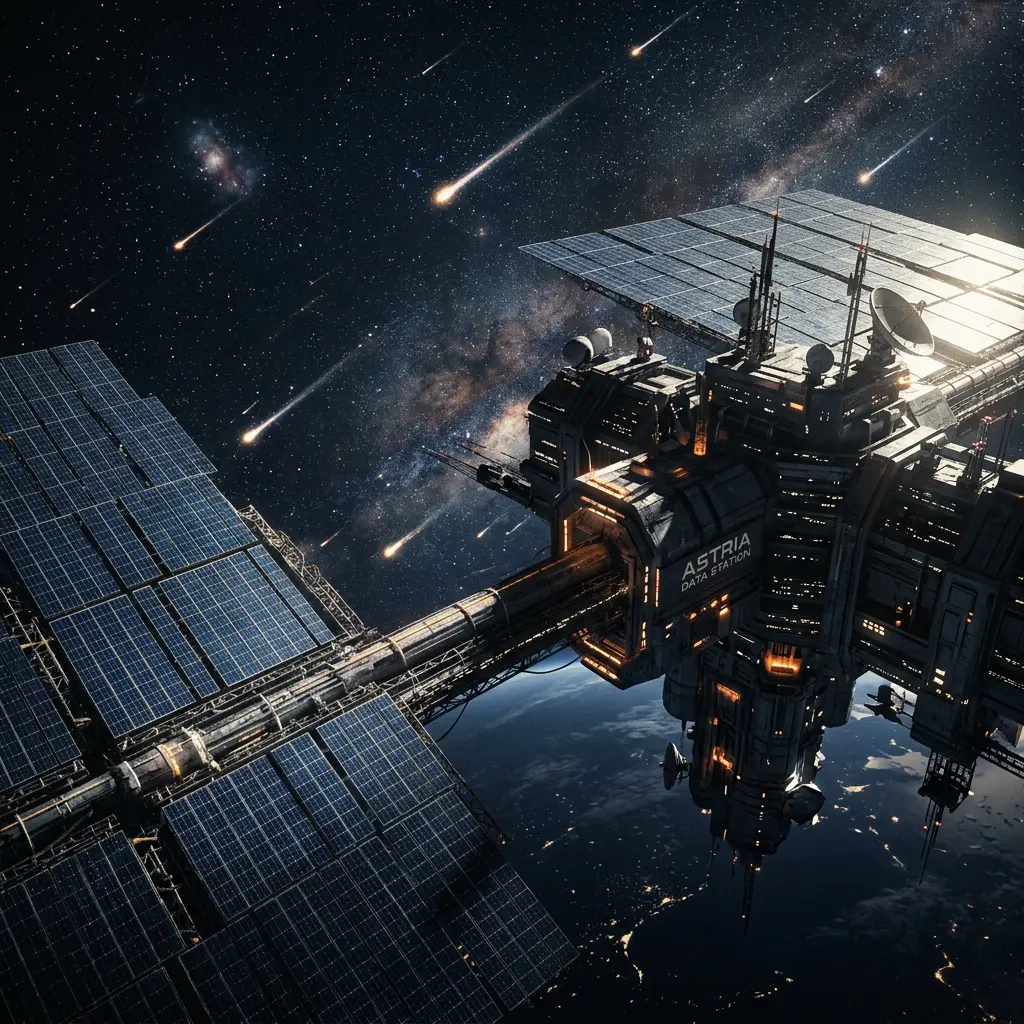
At the same time, the other major challenge, cooling, also changes entirely. On Earth, cooling a data center requires moving air, water, and complex systems that consume additional energy. In space, thermal dissipation is based on radiation into the vacuum, there is no air, no convection. Heat is managed through thermal design and radiative surfaces, eliminating one of the largest energy burdens of traditional data centers.
But not everything is an advantage because what on Earth is a problem of scale, in space it becomes a problem of access. Every kilogram of hardware launched comes at a high cost, and every deployed system must operate without direct intervention. There is no traditional maintenance, no rapid replacement, no margin for error. Infrastructure must, by definition, be more robust, and that completely changes how systems are designed.
Nor is it a universal solution for most applications, latency remains a critical factor. A data center in orbit or on the Moon cannot compete with the proximity of a terrestrial cloud region.
It is not designed to serve mass-consumption applications, it is designed for other scenarios.
Defense.
Earth observation.
Edge processing.
Critical backup.
Global resilience.
Because if there is one thing that defines this movement, it is not efficiency, it is continuity, the ability to keep infrastructure operational even when Earth stops being a stable environment, and that is where this concept stops being futuristic and becomes strategic.
Because in a world where data centers are becoming part of conflicts, where energy is a strained resource and where connectivity can be disrupted, the idea of having computing capacity beyond the reach of those risks completely changes the landscape. It may seem distant, but not as much anymore.
The first systems are already operating beyond the planet. The first commercial projects are under development and the first strategic decisions are already being made.
Sources
• Hewlett Packard Enterprise — Spaceborne Computer (ISS)
• NASA — computing experiments on the International Space Station
• Microsoft Azure Space — loud + satellite integration
• AWS Ground Station — hybrid space-to-ground infrastructure